Publishing Wasn't Built for Experts

I've worked inside three different versions of publishing. I did a virtual internship with Seth Godin. I spent three years as Tim Ferriss's first full-time employee, editing The 4-Hour Body and more than a dozen of his blog posts. I spent six years at what was a top professional publishing house for nonfiction. I've written five books of my own. And I co-founded Author.Inc because after all of that, I still hadn't found a publishing model that actually worked for the people I kept meeting. Founders and executives who had expertise worth sharing and no good way to get it into a book.
The friction they were experiencing had nothing to do with them. The system itself was the problem.
My time at Scribe taught me more about publishing than anything else I've done. I got to see hundreds of books go through the system, from manuscript to published product. I worked alongside talented people who cared about the work. And I started to understand why, even with good intentions on every side, the outcomes for authors kept falling short.
The issue is how the economics of publishing work across the board. Publishers optimize for volume and margins because that's how the business model functions. They take on a lot of authors, bet on a few hitting big, and treat the rest as acceptable losses. In practice, it functions like a venture portfolio: a lot of bets, a few winners, and limited incentive to invest deeply in any single author's long-term outcome.
I watched authors come in after spending $100,000 or more on ghostwriters, only to say they were basically starting over. The manuscript wasn't in their voice. The structure didn't serve their business. The ghostwriter had produced competent prose, but competent prose without the right architecture underneath it doesn't move anything forward. I heard some version of that story dozens of times.
That pattern is what made me start questioning whether the model itself was the problem.
One author I work with went through a traditional publisher for a book a few years back. The process took three years. The illustrator alone took nine months. She had no say in the title, no say in certain word changes, no control over who the illustrator was. She loved the illustrator, but she didn't get to choose her. When it was done, she told me flat out she'd never do traditional publishing again.
That's a mild version of what I've seen. I've worked with authors who couldn't buy their own books at cost to give to clients. Authors who wanted to repurpose their chapters into a course and needed permission from a publisher who wouldn't return their calls. Authors who watched their book go out of print because the publisher decided it wasn't worth keeping in the catalog anymore.
For most nonfiction authors, a traditional deal means making a dollar or two per copy. Fewer than 10% of books sell more than 1,000 copies over their lifetime. At that math, the advance is the only real money most authors see. And in exchange, they've given up their IP, their rights, their timeline, and their ability to use the material however they want.
That trade made sense when publishers controlled distribution, when shelf space at Barnes and Noble determined whether your book reached anyone. That era ended. Amazon and Ingram handle global distribution now. Production costs have collapsed. The only thing traditional publishers still offer that's genuinely hard to replicate on your own is the prestige of the imprint.
Self-publishing looks like the answer. You keep the IP. You move faster. You don't need permission. On paper, it sounds like freedom.
In practice, I've watched self-published authors take on five jobs at once: assembling editors and designers, managing timelines, figuring out distribution, marketing the book, all while running a company. And the quality often reflects it.
When I see a self-published book with an amateur cover and poor editing, I don't think about lost sales. I think about lost leverage. Every podcast that book won't land, every client conversation it won't pre-qualify, every speaking opportunity that will go to the person who published something that looks and feels professional.
The typical timeline for writing and publishing a nonfiction book, by any path, is about five years. I've met authors who tried for a decade and never finished. The choice of which book to write gets made too quickly or not at all. The structure never gets properly engineered. By the time someone realizes the foundation is off, they've invested months or years into something that has to be rebuilt from scratch.
The very first author who went through Author.Inc's process got a first draft done in 39 days. I had to explain to him that I didn't think he understood the pain and time he'd just avoided. I showed him what a first draft looked like from a New York Times bestselling author I'd worked with. That draft had taken two ghostwriters, over $150,000, and a year and a half. His was comparable in quality.
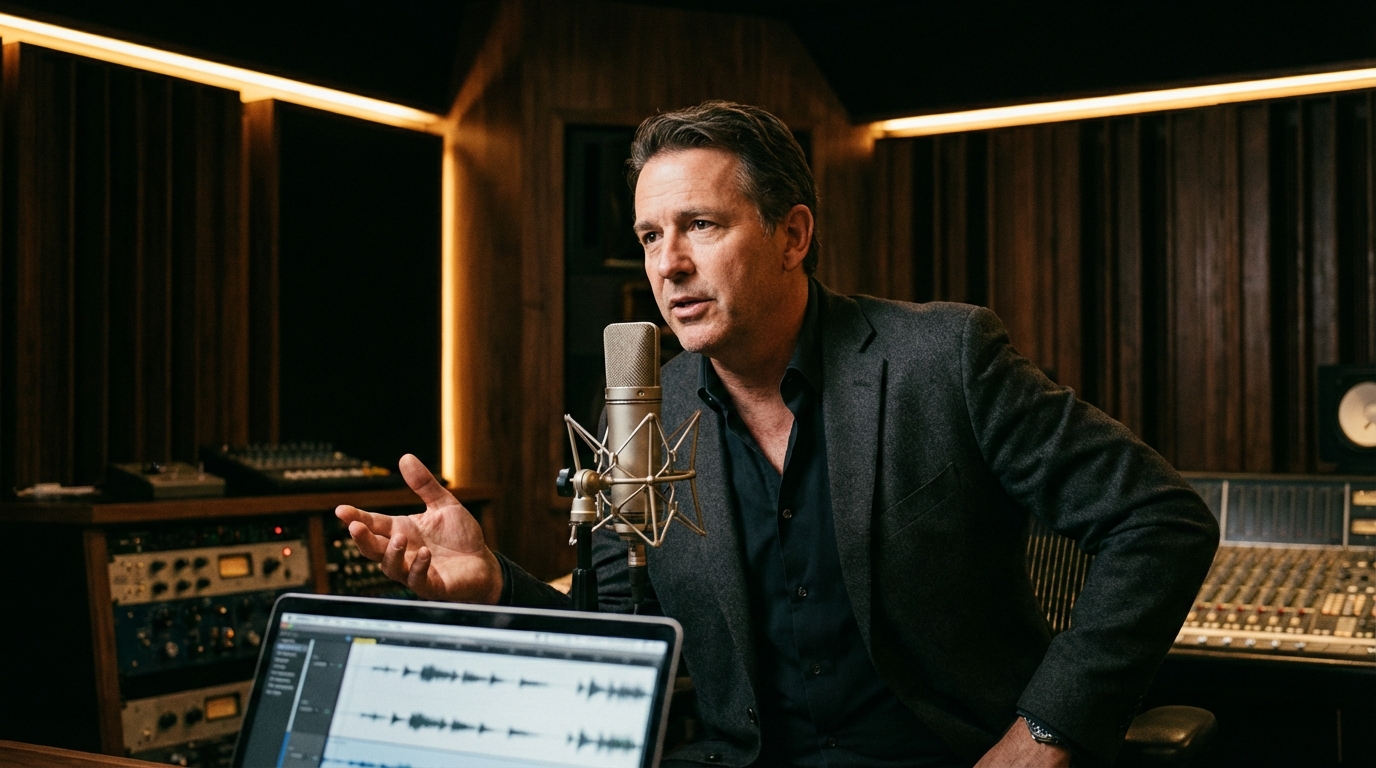
I've since refined the process to where an author can go from recordings to a finished first draft in under a week. No ghostwriter. No generative AI writing the content. The author speaks the book. We handle the architecture. The content comes out in their voice because it literally is their voice.
We built this because there was no good process designed for busy entrepreneurs who have expertise worth sharing. As Miles, my co-founder, puts it, every other avenue is either wildly expensive and time-consuming, or it's DIY with a near-100% failure rate. Meanwhile, AI publishing companies are popping up saying they can make a book in 15 minutes. Fill out a form, get a book. It produces garbage nobody wants to read. That's the opposite end of the same broken spectrum.
What experts actually need is straightforward. Structure that's engineered before the writing starts. Professional publishing quality that signals credibility. Distribution through an imprint that carries weight. And full ownership of the IP so the book compounds as an asset for years. No traditional publisher offers all four. No self-publishing path offers all four. That's what we set out to build.
Traditional publishing was built for writers who want to be authors. It wasn't built for experts who have a business to run and a book that needs to do real work for it. That gap is why we built Author.Inc.

See if now is the right time for your book. Publish is $38,000 paid in full, or $39,990 on the payment plan. Build your book and see your investment.
Copyright ©
2026, Author.Inc. All rights reserved.